SCBA Breathing Apparatus Training
Practical training for emergency response teams who may need to enter smoke-filled or oxygen-deficient areas — pre-use checks, donning, air management, teamwork and safe exit.
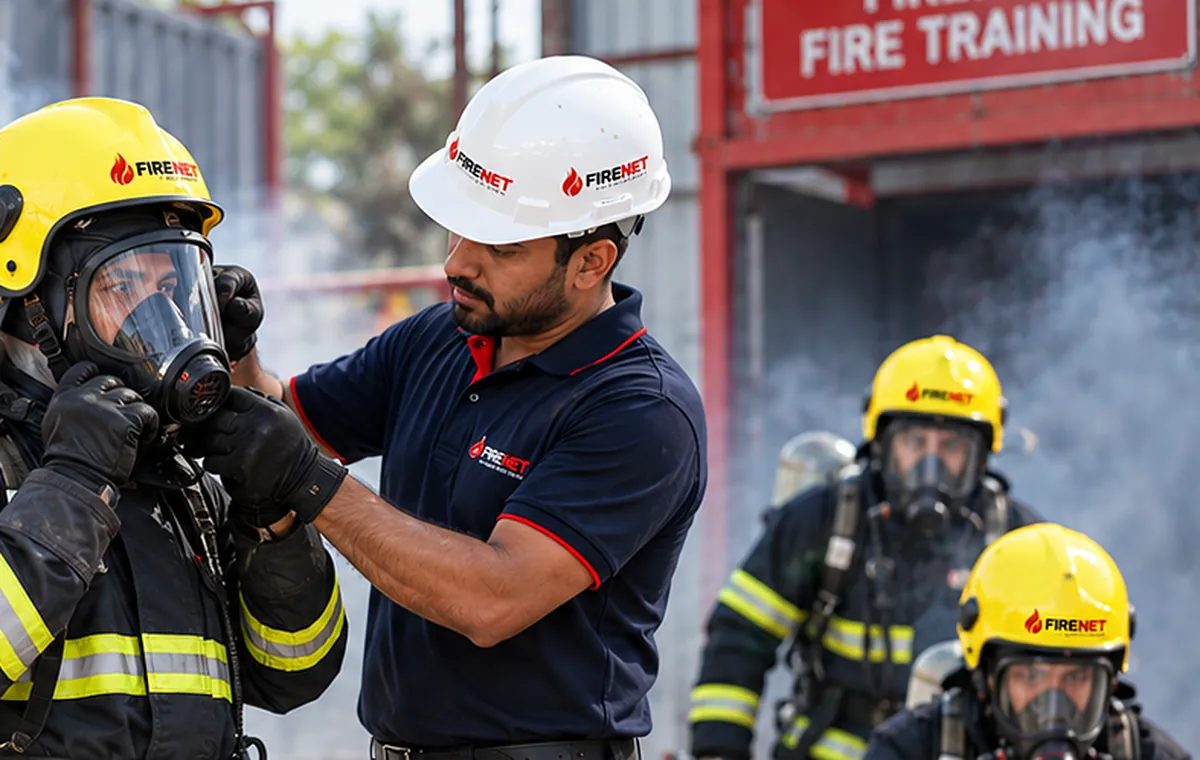
The right set is only safe in trained hands
A self-contained breathing apparatus (SCBA) supplies clean air from a cylinder carried on the wearer’s back, allowing trained people to work in smoke, toxic gases or oxygen-deficient atmospheres. Industrial sites keep SCBA sets for emergency response, rescue and handling leaks — but a set that nobody has practised with can give a false sense of security.
FIRENET’s SCBA training focuses on practical competence: understanding each part of the set, carrying out pre-use checks, putting it on quickly and correctly, managing air supply, working in pairs and getting out safely when the low-pressure warning sounds. Wherever possible we train on the sets your team will actually use.
Who should attend
- Industrial emergency response and fire teams
- Chemical, pharmaceutical and process plants
- Sites with ammonia refrigeration or gas storage
- Confined-space and rescue teams
- Safety officers who inspect and maintain SCBA sets
What the Course Covers
Know Your Set
Cylinder, valve, pressure reducer, demand valve, face mask, harness, gauge and low-pressure warning whistle.
Pre-Use Checks
Cylinder pressure, high-pressure leak test, whistle test and face-mask seal check — every time, before use.
Donning & Doffing
Putting the set on quickly and correctly, and removing it safely, with timed practice.
Air Management
Estimating working duration from cylinder pressure and planning a safe turn-around point.
Buddy System
Working in pairs, communication, entry control records and emergency signals.
Care & Storage
Cleaning and disinfecting masks, recharging cylinders and keeping sets ready for use.
Typical Course Outline
Duration depends on group size and the amount of practical work; most programmes run from half a day to one day.
| Module | What is covered | Format |
|---|---|---|
| 1. Respiratory hazards | Smoke, toxic gases and oxygen deficiency; when SCBA is needed | Classroom |
| 2. SCBA components | Parts of the set and how they work together | Demonstration |
| 3. Pre-use checks | Pressure, leak and whistle tests; mask seal | Hands-on |
| 4. Donning drills | Timed donning and doffing, buddy checks | Hands-on |
| 5. Working in SCBA | Movement, communication, air management, exit on warning | Practical exercise |
| 6. After use | Cleaning, inspection, recharging and records | Demonstration |
Participants should be medically fit to wear breathing apparatus. Facial hair and some spectacles can prevent a proper mask seal — please let us know in advance.
How we run the training
Equipment review
We check the type and condition of your SCBA sets before the session.
Classroom session
Hazards, components and procedures explained clearly.
Hands-on practice
Checks and timed donning drills for every participant.
Practical exercise
Working in pairs in a simulated scenario suited to the site.
Records
Participation certificates, attendance and notes on set condition.
Frequently Asked Questions
Training is most useful on the sets your team will actually use, so we plan the session around your equipment. Please tell us the make, model and number of sets when booking.
Most programmes take half a day to one day, depending on the group size and how much practical work is included.
Only people who are trained and medically fit should wear breathing apparatus. A clean-shaven face is important for a proper face-mask seal.
Regular practice is essential. Many sites hold refresher drills every few months and a full refresher at least once a year.
We carry out visual and functional checks during the training and let you know about any sets that need servicing by an authorised agency.
What Our Clients Say
Need SCBA training for your team?
Free site assessment, a clear written quote and documentation you can hand to the fire authority or your insurer.