
Evacuation & Mock Fire Drills in Pune
Find out how quickly and safely your people can get out — before a real emergency does. FIRENET plans, runs and reports on evacuation drills for offices, factories, hospitals, schools and housing societies.
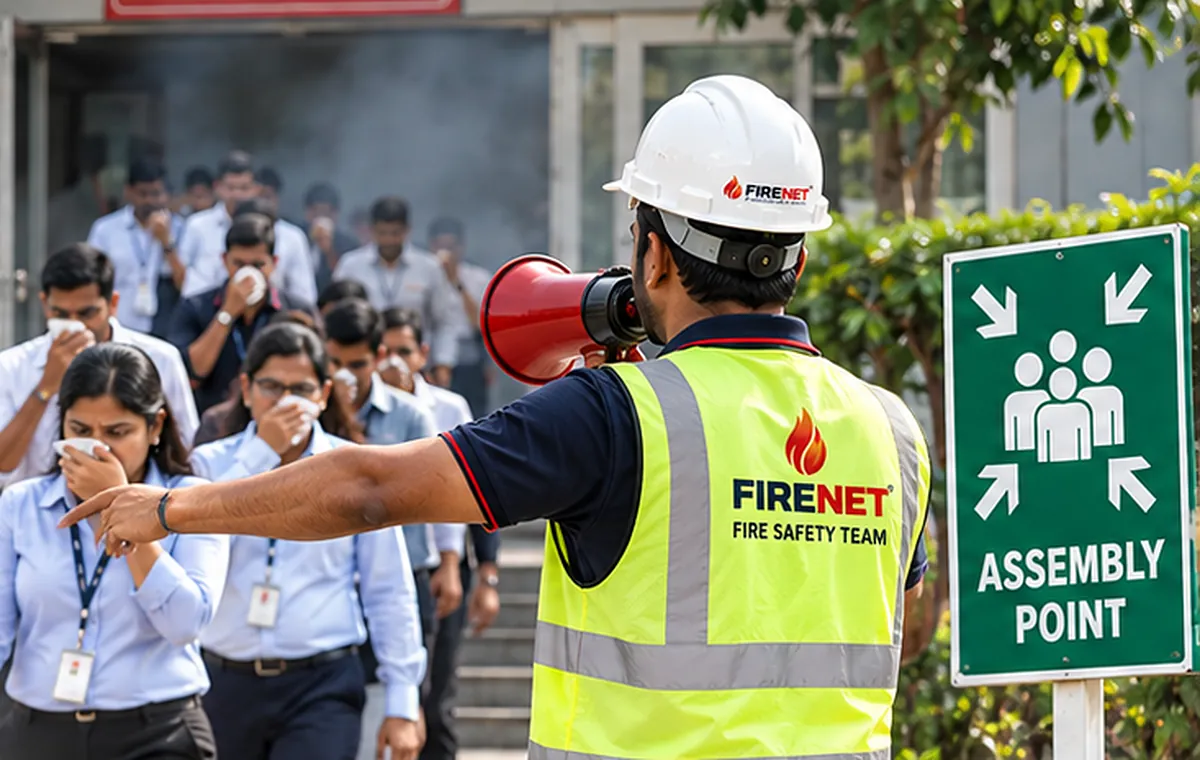
A drill shows what a plan on paper cannot
Most buildings have an evacuation plan pinned on a wall. A drill tests whether it actually works: can everyone hear the alarm, do people know the nearest exit, are staircases and doors clear, do wardens sweep their floors, and can you account for everyone at the assembly point?
FIRENET runs drills that are realistic without causing panic. We plan the scenario with your management, brief fire wardens, observe every floor during the drill, time each stage and hold a debrief immediately afterwards. You receive a written report with timings, observations and a clear list of corrective actions — useful for your internal EHS records, audits, insurers and fire safety inspections.
Who we run drills for
- IT offices and corporate campuses
- Factories, warehouses and MIDC units (including shift-wise drills)
- Hospitals and clinics (with horizontal evacuation planning)
- Schools, colleges and hostels
- Housing societies and commercial complexes
- Hotels, malls and restaurants
A Complete Drill Programme
Pre-Drill Planning
Review of escape routes, exits, assembly points and warden roles, and agreement on the drill scenario and timing.
Alarm & PA Check
We confirm the alarm or PA can be heard in every area — including toilets, stores, basements and noisy workshops.
Timed Evacuation
Each floor or area is observed and timed from alarm to assembly point, so you have measurable results to improve on.
Special Assistance
Plans for visitors, contractors and people who need help evacuating, including refuge areas where available.
Headcount & Roll Call
We check how quickly you can account for everyone — and how you would identify anyone missing.
Written Report
Timings, photos of obstructions, warden performance and a prioritised list of corrective actions.
What Your Drill Report Covers
The report turns one drill into specific improvements you can act on.
| Item | What we record | Why it matters |
|---|---|---|
| Alarm response | Time from alarm to people starting to move | Delays usually mean the alarm is not heard or not taken seriously |
| Evacuation time | Time for each floor / area to reach the assembly point | Gives a baseline to improve on in the next drill |
| Exit routes | Locked, blocked or cluttered exits and staircases | Obstructions are the most dangerous finding in any drill |
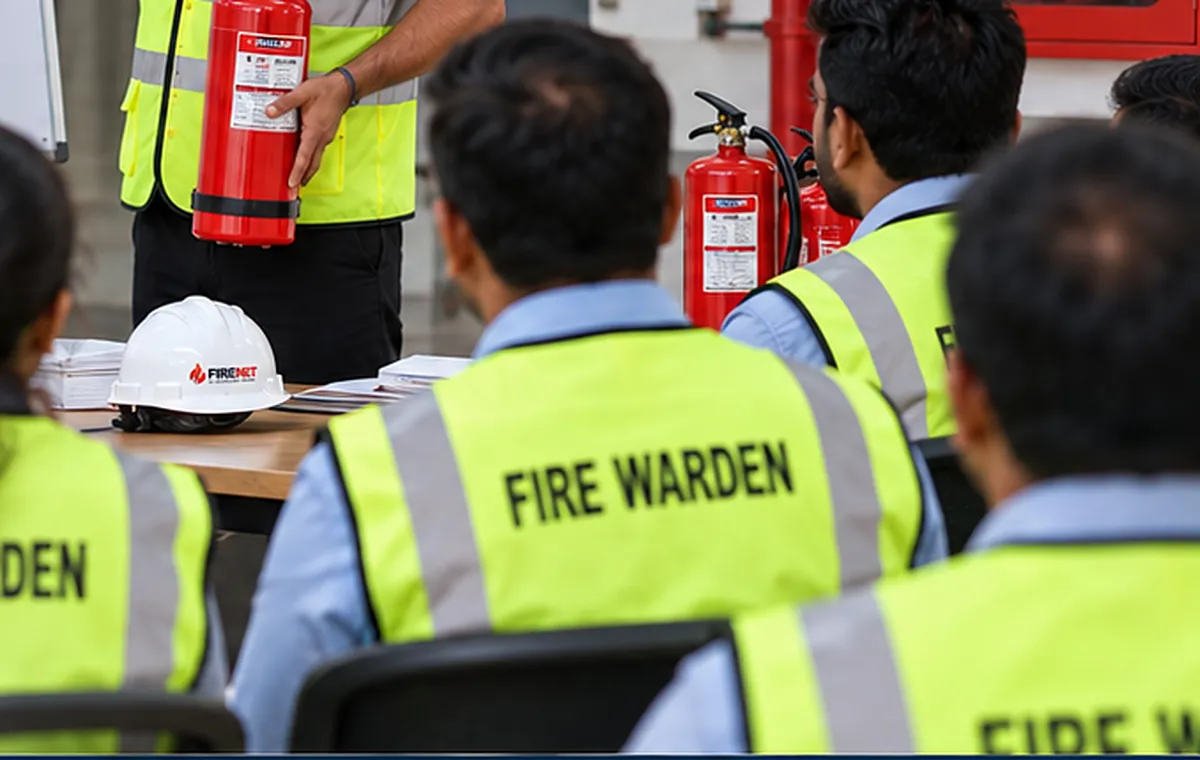
| Wardens | Floor sweeps, use of vests, communication, roll call | Wardens make the difference in a real emergency |
| Headcount | Time to account for everyone, visitor records | You must know quickly if anyone is still inside |
| Audibility | Areas where the alarm or PA was weak or unclear | Points to sounders or speakers that need adding or repair |
Reports are shared in PDF, with photographs where permitted by the site.
How a drill runs
Plan
Meet management, walk the routes and agree the scenario, date and time.
Brief wardens
Short briefing so wardens know their floors, sweep routes and roll-call duties.
Conduct the drill
Alarm raised as agreed; our team observes and times every area.
Debrief
Immediate discussion with management and wardens while it is fresh.
Report & follow-up
Written report with actions — and a follow-up drill to confirm improvements.
Frequently Asked Questions
Many organisations run a full drill at least once or twice a year, and more often for high-risk sites, hospitals, schools or sites with shift workers so every shift takes part. Your fire authority, insurer or corporate EHS policy may set a specific frequency.
For a first drill we recommend an announced drill so people learn the routes. Once routines are established, unannounced drills give a more realistic picture. We help you choose and plan either type safely.
A well-planned drill usually takes 15–30 minutes. We schedule it with you to avoid critical activities and agree in advance which processes or equipment must be safely paused.
Yes. You receive a written drill report with timings, observations and corrective actions, which can be kept with your fire safety records.
Yes. Many clients combine a fire warden training session with the drill so wardens practise their roles on the same day.
What Our Clients Say
Need evacuation drills you can rely on?
Free site assessment, a clear written quote and documentation you can hand to the fire authority or your insurer.