
Fire Hydrant System Installation & AMC in Pune
Wet risers, yard hydrants, hose reels and fire pump rooms — designed, installed, tested and maintained by FIRENET for factories, warehouses, commercial buildings and housing societies across Pune and Pimpri-Chinchwad.
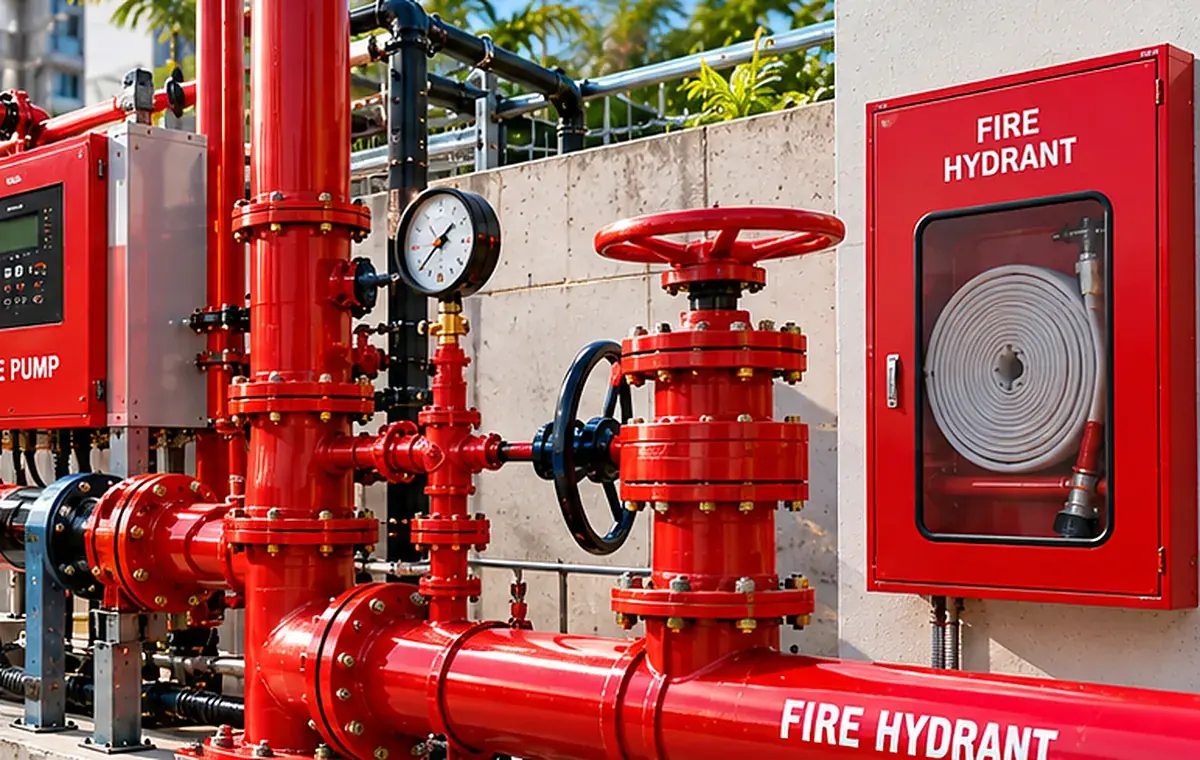
A hydrant system is only useful if it works on the day it is needed
A fire hydrant system gives your building a fixed supply of pressurised water that trained staff or the fire brigade can use in the first critical minutes of a fire. It is made up of a dedicated water tank, fire pumps, a network of pipes, landing valves, hose reels, hoses and branch pipes — and every one of those parts has to work together.
In practice, most hydrant failures we see in Pune are not design problems. They are maintenance problems: a jockey pump running continuously because of a leak, a diesel pump that has not been run in months, landing valves seized shut, hoses cracked from sun exposure, or a fire tank that has been quietly used for other purposes. FIRENET handles both sides — new installations built to the approved drawings, and regular testing and AMC that keep existing systems ready.
Where hydrant systems are typically required
- High-rise residential towers and housing societies (wet risers and hose reels)
- Factories, workshops and MIDC industrial units
- Warehouses and logistics parks
- Hospitals, hotels, malls and commercial complexes
- Schools, colleges and assembly buildings
Hydrant System Services
Design & Drawings
Hydrant layout, pipe sizing and pump selection based on your building’s occupancy, height and approved plans under NBC 2016 Part 4 and applicable IS standards.
Installation
MS/GI pipework, landing valves, hose reel drums, yard hydrants, fire brigade inlet connections and pump room equipment, installed and pressure-tested.
Fire Pump Rooms
Main electric pump, diesel standby pump and jockey pump — installation, controller panels, pressure switches, auto-start testing and diesel engine care.
Testing & Commissioning
Hydrostatic pressure testing of the network, flow and pressure checks at the most remote outlet, and pump performance verification.
AMC & Repairs
Scheduled visits, valve operation, hose inspection, gland and seal replacement, leak rectification and emergency breakdown support.
NOC Documentation
Test reports, completion certificates and maintenance records needed for Fire NOC applications, renewals and the six-monthly Form B certificate.
Fire Pump Room Maintenance
The pump room is the heart of the hydrant and sprinkler system. We keep it ready with a routine that covers all three pumps.
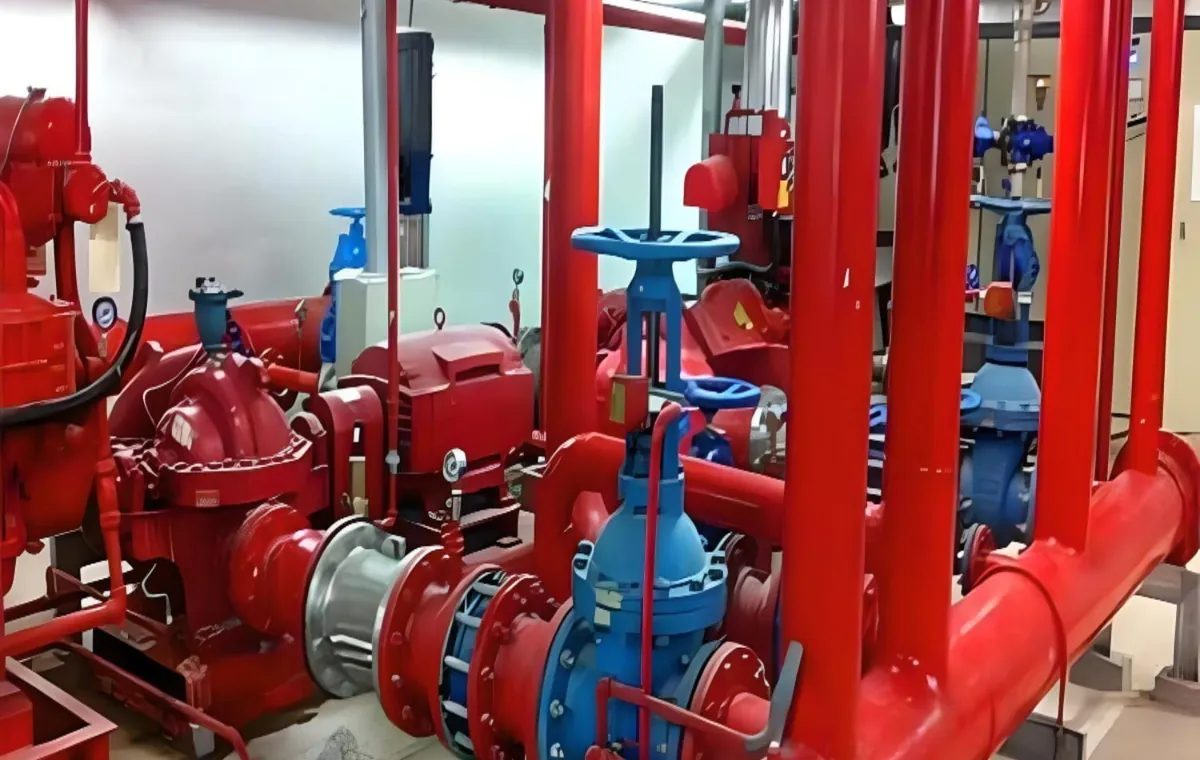
| Check | What we verify | Typical frequency |
|---|---|---|
| Jockey pump | Cut-in / cut-out pressures, frequent starts that indicate leaks | Every visit |
| Main electric pump | Auto-start on pressure drop, delivery pressure, gland leakage, vibration | Monthly run test |
| Diesel pump | Auto-start, battery voltage, fuel level, coolant, lube oil, exhaust | Weekly run by site; checked every visit |
| Valves & strainers | Suction/delivery valves locked open, strainer cleaning, NRV function | Quarterly |
| Fire water tank | Reserved capacity available, no cross-connection to domestic use | Quarterly |
| Landing valves & hoses | Valve operation, hose condition, couplings, branch pipes | Quarterly |
Frequencies are typical starting points; your AMC schedule is set after a site survey based on the system size, occupancy and manufacturer recommendations.
How a hydrant project runs
Site survey
We study approved plans, water storage, pump room location and fire brigade access.
Design & quotation
Layout drawings, bill of materials and a clear written quote with scope and timelines.
Installation
Pipework, valves, hose reels and pump room equipment installed by our own team.
Testing & commissioning
Hydrostatic test, flow test and pump performance checks, witnessed by you.
Handover & AMC
Test certificates, as-built details and an optional AMC to keep the system NOC-ready.
Frequently Asked Questions
It depends on the building’s height, occupancy and built-up area as set out in NBC 2016 Part 4 and the local fire authority’s requirements. High-rise residential buildings, most industrial units, warehouses and larger commercial buildings usually need one. We can review your approved plan and tell you what applies.
A wet riser is a vertical pipe inside a building with landing valves on each floor, used mainly in multi-storey buildings. Yard hydrants are external hydrant points around a site, common in factories and warehouses, so hoses can reach every side of the building.
Frequent jockey pump starts almost always mean the system is losing pressure — usually from a leaking valve, gland, flange or buried pipe. Ignoring it wears out the pump and can hide a larger fault. Our technicians trace and fix the leak and reset the pressure switch settings.
Pumps should be run regularly (the diesel pump weekly by site staff is common practice), with a professional inspection of pumps, valves, hoses and the tank at least quarterly. An AMC makes sure this happens and gives you the records needed for Form B and NOC renewal.
Yes. We start with a condition survey, share a list of defects with photos, and then maintain the system under an AMC once any critical issues are fixed.
What Our Clients Say
Need a reliable fire hydrant system?
Free site assessment, a clear written quote and documentation you can hand to the fire authority or your insurer.