Electrical Safety Audit in Pune
Electrical faults are one of the most common causes of fires in buildings. Our audit finds the overloaded circuits, loose connections, poor earthing and unsafe practices before they start one.
Most electrical fires give warning signs first
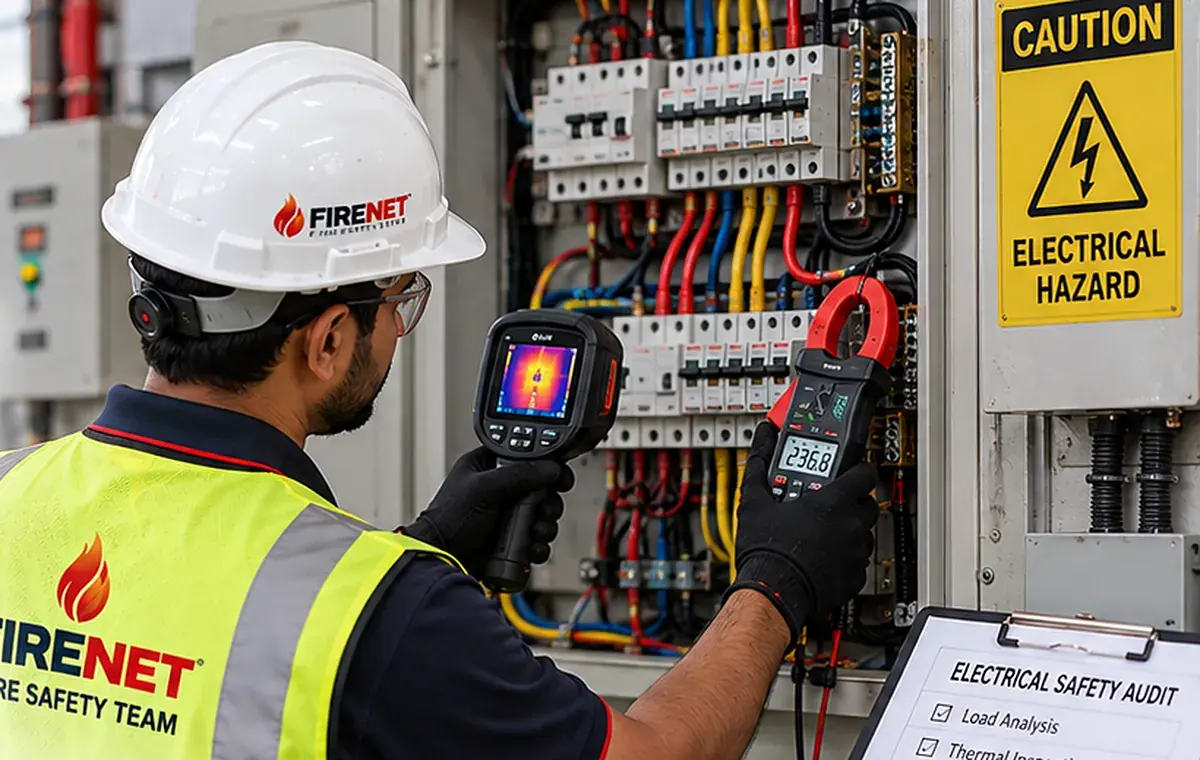
Burnt smell near a panel, tripping breakers, warm cables, extension boards daisy-chained under desks, missing covers on distribution boards — these are the early signs that often come before an electrical fire. An electrical safety audit looks for them systematically across your site and turns them into a clear action list.
FIRENET’s audit combines a detailed visual inspection with checks of protection devices, earthing and the fire safety arrangements around electrical rooms. We refer to the applicable requirements such as the CEA (Measures relating to Safety and Electric Supply) Regulations, relevant IS codes for wiring and earthing, and NBC 2016 — and we write the report so that both your management and your electrician can act on it.
Premises that benefit most
- Factories and workshops with heavy machinery
- Offices and IT floors with high equipment density
- Hospitals, labs and data rooms
- Hotels, malls and commercial kitchens
- Housing societies with ageing meter rooms and risers
Audit Scope
Panels & Distribution Boards
Condition, covers, labelling, signs of overheating, loose terminations and access clearances.
Cables & Wiring
Overloading, damaged insulation, joints, temporary wiring and extension-board misuse.
Earthing & Bonding
Earth pits, earth continuity and bonding of equipment and metal structures.
Protection Devices
MCB, MCCB, RCCB/ELCB ratings and presence, and correct protection for circuits.
Electrical Room Fire Safety
CO₂ extinguishers, rubber mats, signage, storage in panel rooms and detection.
Other Risks
DG sets, transformers, UPS and battery rooms, lightning protection and EV charging points.
What We Commonly Find
Every finding in your report is rated so you know what to fix first.
| Area | Typical finding | Risk |
|---|---|---|
| Distribution boards | Missing covers, exposed live parts, no circuit labels | Shock and fire |
| Terminations | Loose or discoloured connections, undersized lugs | Overheating and arcing |
| Cabling | Overloaded extension boards, joints taped in ceilings | Fire in concealed spaces |
| Earthing | High earth resistance, broken earth continuity | Shock and equipment damage |
| Protection | No RCCB/ELCB on socket circuits, wrong breaker ratings | Faults not cleared in time |
| Panel rooms | Stored materials, no CO₂ extinguisher, blocked access | Fire spread and delayed response |
Findings are graded (for example high / medium / low) with photographs and recommended actions.
How the audit works
Scope & documents
We agree the areas to cover and review single-line diagrams and past reports if available.
Site inspection
Systematic inspection of panels, cabling, earthing and equipment areas.
Checks & tests
Protection devices and earthing checked, with shutdowns only if agreed in advance.
Report
Prioritised findings with photos and practical recommendations.
Close-out support
We help you plan and verify corrective actions.
Frequently Asked Questions
Many organisations audit annually, and also after major changes such as adding machinery, increasing load or renovating a floor. Insurers and corporate policies may require a specific frequency.
Most of the audit is done without any shutdown. If specific tests need an isolation, we agree the timing with you in advance to avoid disruption.
The report lists clear corrective actions for your electrical contractor. For fire-safety items such as extinguishers, detection or suppression for panel rooms, FIRENET can quote and carry out the work.
No. A fire safety audit covers the whole building’s fire protection and means of escape. An electrical safety audit looks in detail at electrical installations as a source of fire. Many clients combine both.
What Our Clients Say
Need a reliable electrical safety audit?
Free site assessment, a clear written quote and documentation you can hand to the fire authority or your insurer.