Fire Classes: A, B, C, D and K
Indian and international fire codes classify fires by fuel type, because different fuels need different extinguishing methods:
- Class A — ordinary combustibles: wood, paper, cloth, plastic, rubber
- Class B — flammable liquids: petrol, diesel, paint, solvents, oil
- Class C — flammable gases: LPG, natural gas, hydrogen
- Class D — combustible metals: magnesium, aluminium powder, titanium (mainly industrial)
- Class K (sometimes labelled Class F) — cooking oils and fats, typically in commercial kitchens
- Electrical fires — not a separate class under IS norms, but extinguisher choice matters because water-based agents conduct electricity and are unsafe on live equipment
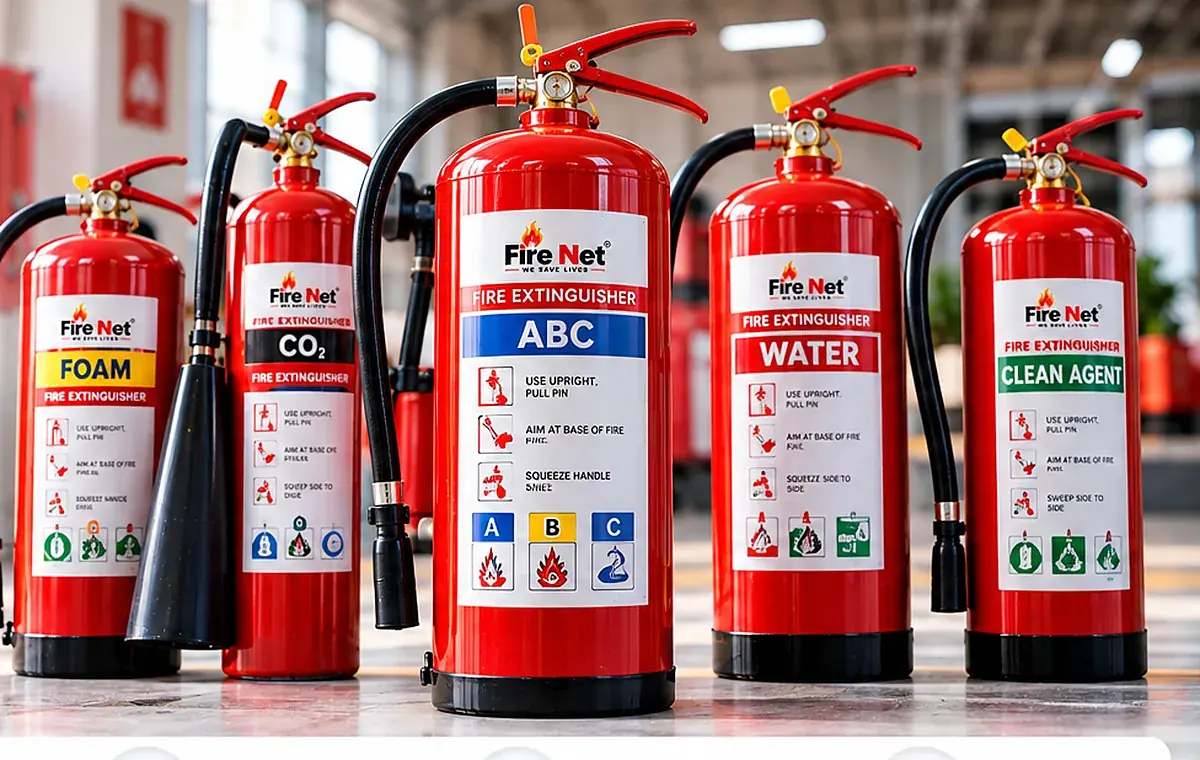
ABC (DCP) Fire Extinguishers
The most common all-purpose extinguisher in India. It uses monoammonium phosphate dry chemical powder to smother Class A, B and C fires. Widely used in homes, offices, shops, vehicles and as a general-purpose first line of defence in factories.
Best for: General-purpose use where the fire risk is mixed or unknown. Limitation: Powder residue can damage sensitive electronics; visibility reduction during discharge.
CO₂ Fire Extinguishers
Carbon dioxide extinguishers smother fire by displacing oxygen, leaving no residue. This makes them ideal for server rooms, electrical panels, laboratories and areas with sensitive equipment where powder or foam residue would cause damage.
Best for: Electrical panels, server/data rooms, laboratories. Limitation: Less effective outdoors or in draughty areas; not recommended for deep-fat cooking oil fires.
Foam (AFFF) Fire Extinguishers
Aqueous film-forming foam extinguishers work well on flammable liquid fires (Class B) by forming a film over the liquid surface that cuts off oxygen and prevents re-ignition. Also effective on ordinary combustibles (Class A).
Best for: Workshops, warehouses, fuel storage areas, garages. Limitation: Conductive — not for use on live electrical equipment.
Clean Agent Fire Extinguishers
Clean agent extinguishers use a gaseous or liquefied-gas agent that leaves no residue and is non-conductive, making them suitable for electronics, control rooms, and increasingly for lithium-ion battery storage and EV-related risk areas, where a clean, fast-acting knockdown is valuable.
Best for: Data centres, control rooms, battery storage, high-value electronics. Limitation: Generally higher cost than DCP or CO₂ equivalents.
K-Class Wet Chemical Extinguishers
Purpose-built for commercial kitchen fires involving cooking oils and fats. The wet chemical agent reacts with the hot oil to form a soap-like layer (saponification) that seals the surface and prevents re-ignition — something general-purpose extinguishers cannot do safely.
Best for: Restaurant, cloud kitchen, hostel and canteen kitchens with deep fryers or large cooking vessels. Note: A fire blanket is a useful complementary tool for smaller kitchen fires.
Modular / Automatic Fire Extinguishers
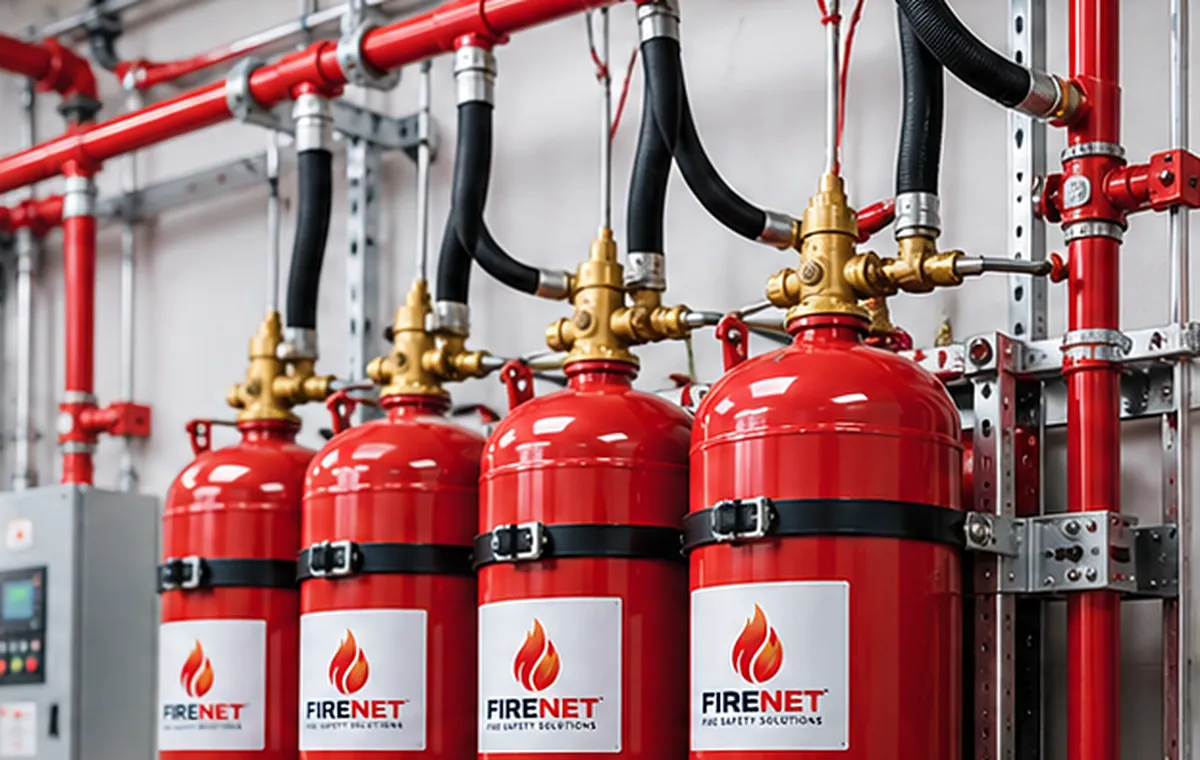
A ceiling-mounted unit (ABC powder or clean agent) with a heat-sensitive glass bulb. When the temperature below it reaches the set point, the bulb bursts and the unit discharges on its own — no one needs to be present. Useful for unattended risk points such as electrical panel rooms, server rooms, generator rooms and stores.
Best for: Panel and server rooms, generator rooms, unattended machinery, stores. Note: Complements, rather than replaces, hand-held extinguishers in occupied spaces.
Fire Extinguisher Balls
A dry-powder ball that bursts on contact with flame. It can be kept near a risk point (it activates by itself when the fire reaches it) or thrown into a small fire from a distance. A low-cost backup for homes, kitchens, vehicles and small shops.
Best for: Homes, small shops, vehicles, as a backup. Note: Not a substitute for a rated extinguisher in commercial premises.
Comparison Table
| Type | Fire Classes | Typical Use | Leaves Residue? |
|---|---|---|---|
| ABC (DCP) | A, B, C | General purpose — home, office, factory | Yes |
| CO₂ | B, C, electrical | Electrical panels, server rooms, labs | No |
| Foam (AFFF) | A, B | Flammable liquids, workshops, warehouses | Yes (wet) |
| Clean Agent | A, B, C, electrical | Data centres, electronics, battery storage | No |
| K-Class (Wet Chemical) | K (cooking oil) | Commercial kitchens | Yes (wet) |
| Water | A | Paper, wood, cloth (non-electrical areas) | Yes (wet) |
How to Choose the Right Extinguisher
- Identify the fuel risk in the space — paper and furniture, electrical panels, cooking oil, flammable liquids, or a mix.
- Match the extinguisher class to that risk using the table above.
- Check the applicable code — NBC 2016 and Maharashtra fire rules specify minimum extinguisher counts and placement based on floor area and occupancy type; a fire safety audit will confirm exact requirements for your premises.
- Size appropriately — 2 kg/4 kg units for homes and small offices, 4–9 kg for commercial spaces, larger capacities for industrial risk areas.
- Service annually and inspect every six months regardless of type, per standard fire safety practice.
Not sure what you need? FIRENET can assess your premises and recommend the right mix of extinguisher types and quantities — available across India for supply, and in Pune for installation and servicing.