
Monthly Visual Checklist
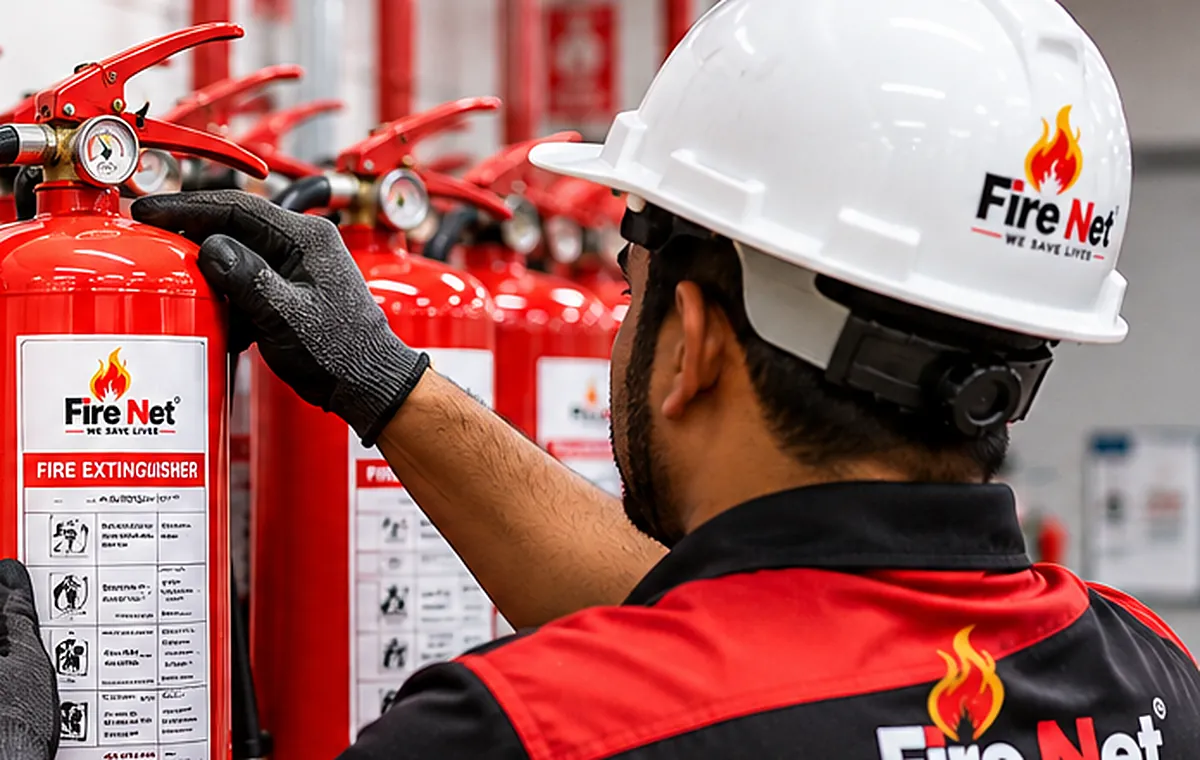
This quick check can be done by any responsible staff member — no special training required. It takes about five minutes per extinguisher.
- ☐ Extinguisher is in its designated location, clearly visible and unobstructed
- ☐ Pressure gauge needle is in the green zone (not over or under-pressurised)
- ☐ Safety pin and tamper seal are intact and unbroken
- ☐ No visible physical damage — dents, corrosion, leakage, or damage to the hose/nozzle
- ☐ Operating instructions on the label are legible
- ☐ Mounting bracket or stand is secure
- ☐ Access to the extinguisher is not blocked by furniture, stock or equipment
Half-Yearly Inspection
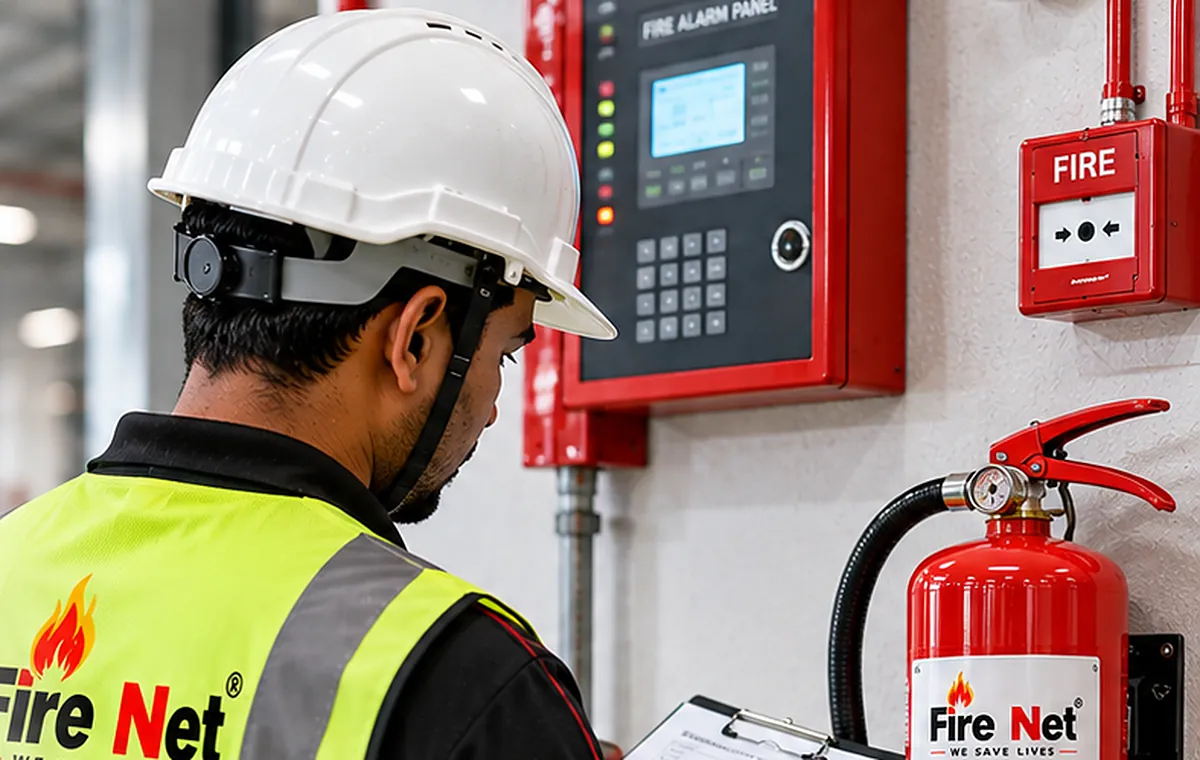
In addition to the monthly checks, a more detailed inspection every six months should confirm:
- ☐ Weight of CO₂ and other gas-based extinguishers is within the acceptable range (checked by weighing, since gauge pressure alone isn’t reliable for CO₂)
- ☐ No corrosion on the cylinder body, base or valve assembly
- ☐ Hose and nozzle are free of cracks, blockages or wear
- ☐ Extinguisher type and capacity still match the current fire risk of that location
- ☐ Signage pointing to the extinguisher location is present and visible
Annual Professional Service
Once a year, every extinguisher should undergo a full service by a trained technician, typically covering:
- ☐ Complete discharge testing (on a sample basis or per manufacturer/code requirement)
- ☐ Internal inspection of the cylinder for corrosion or damage
- ☐ Refilling with fresh extinguishing agent to correct specification
- ☐ Replacement of O-rings, seals and other wear parts as needed
- ☐ Re-pressurising to correct working pressure
- ☐ Functional test of the valve and discharge mechanism
- ☐ Fresh tamper seal, service tag with date and technician details, and next-due-date label
Hydrostatic Testing
Hydrostatic testing is a pressure test performed on the extinguisher cylinder itself to verify it can safely withstand its rated pressure — checking for metal fatigue or weakening that visual inspection alone can’t detect. It is due every 2 years for foam, water and water mist extinguishers, every 3 years for ABC powder, K-Type kitchen and clean agent, and every 5 years for CO₂ (other types as per the manufacturer’s instructions); the last test date is marked on the cylinder or service record. See hydro test explained for how the test is done and what it costs. Cylinders that fail hydrostatic testing must be condemned and replaced — they cannot be safely refilled.
Warning Signs Needing Immediate Attention
Don’t wait for the next scheduled check if you notice: a pressure gauge outside the green zone, visible dents/corrosion/leakage on the cylinder, a cracked or blocked hose/nozzle, a missing or broken safety pin/tamper seal, or a missing/illegible service tag. Any of these mean the extinguisher may not work reliably in an emergency and should be serviced or replaced immediately.
Not sure whether an old extinguisher is still usable? Read does a fire extinguisher expire?
Keeping Maintenance Records
Beyond safety, documented maintenance records matter for three practical reasons: they’re typically required for Fire NOC issuance and renewal, insurers often ask for them when settling fire-related claims, and they protect the organisation by demonstrating due diligence. A signed service report and visible service tag on every extinguisher after each visit should be considered non-negotiable.